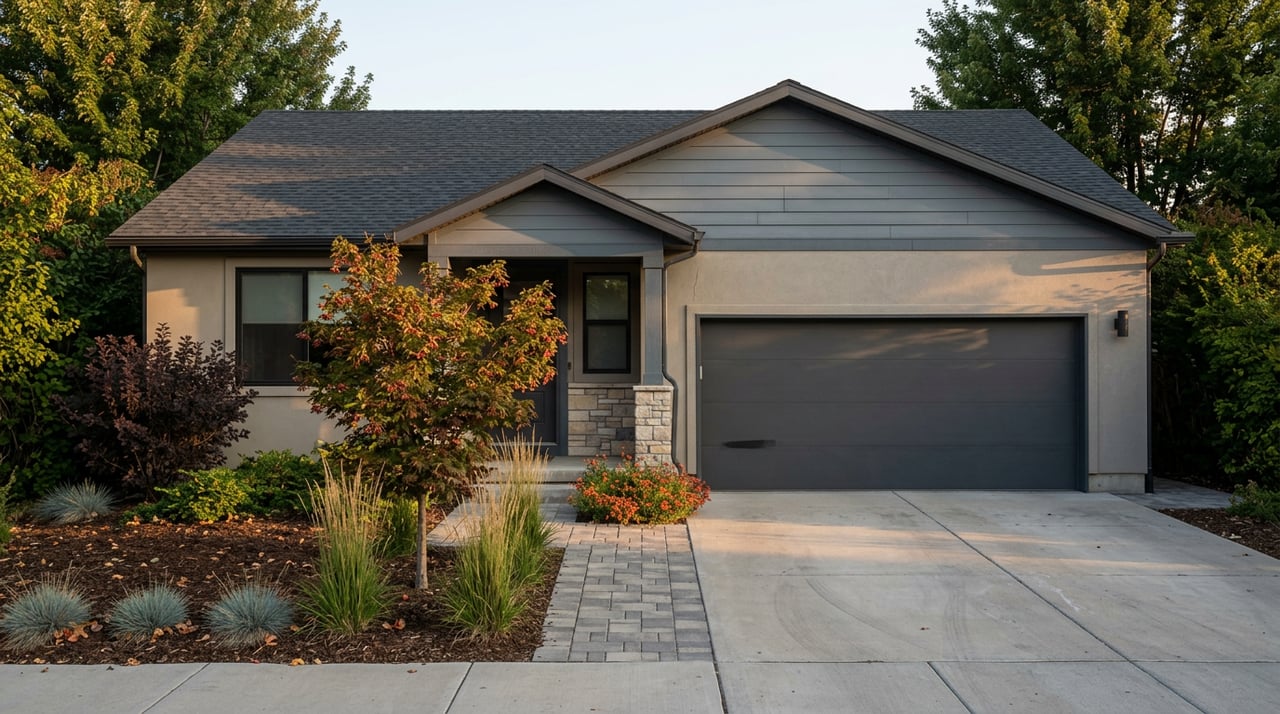
Say you close on a new build in one of Erie's newer subdivisions this fall. The builder's disclosure told you what your taxes would run in the year of closing. You budgeted around that number. Then, sometime in the next year or two, a new line appears on your county tax bill, one that wasn't there before and wasn't part of your original estimate. It's not a mistake. It's a metro district catching up to your home's actual assessed value, and it can add hundreds of dollars a month to a payment you thought you'd already locked in.
This isn't a rare glitch. It's how new construction financing works across most of Erie, and it's increasingly common in newer pockets of Superior and Lafayette. The mechanism is public, disclosed by law, and completely predictable once you know where to look. Most buyers don't know where to look until after they've signed.
Why the First Bill Doesn't Match the Real Number
New homes have to be valued by the county assessor before a metro district's mill levy can be applied to them, and that valuation typically happens within the first year after the home is built. In practice, the tax often doesn't show up on a bill until one to two years after closing, once the assessor catches up and certifies the home's value. Erie's own finance department is direct about this on its metro districts page: buyers should factor the tax into their budget from day one, because waiting for the first bill to confirm the number is waiting too long.
That gap between closing and full assessment is exactly why the sticker price and the builder's initial estimate can both be accurate and still leave you unprepared. The estimate reflects the tax picture at the moment you signed. The mill levy that eventually lands on your bill reflects a district board's budget, a bond repayment schedule, and an assessed value that hadn't been finalized yet.
What a Metro District Actually Is
A metropolitan district is a local government, formed under Colorado's Title 32, created specifically to finance the streets, water lines, sewer systems, and parks a new subdivision needs before a single house is finished. The developer forms it, issues bonds against future tax revenue, and builds the infrastructure. Residents then repay that debt over years through a mill levy that shows up as a separate line on their property tax bill, distinct from the town's own levy, the county's, and the school district's.
This is different from an HOA in a way that matters at tax time. An HOA is a private association funded by dues that maintain shared amenities. A metro district is a government with actual taxing authority, and its debt survives changes of ownership. If you buy a home in a district still repaying its bonds, you inherit that repayment schedule the day you close, whether or not you were the one who benefited from the original construction.
Towns lean on this tool because Colorado's TABOR and the residential assessment structure make it hard for a city or county to fund new infrastructure out of general revenue without a public vote. Metro districts let growth pay for itself, financed by the people who move into the new homes rather than by every taxpayer in town. That's a defensible policy. It's also why the tax burden on a brand-new subdivision can look nothing like the tax burden on a resale home three blocks away.
The Same Town, Two Very Different Bills
Erie is the clearest example of how much this number can swing within a single town. The Town of Erie's own base mill levy is 14.137 mills, applied to every property regardless of district. Layer a metro district on top of that, and the range gets wide fast.
| District | Total Mill Levy | Notes |
|---|---|---|
| Town of Erie (base, all properties) | 14.137 | Applies townwide, separate from any district |
| Erie Commons Metropolitan District No. 3 | 20.000 | District's own published baseline figure |
| Erie Commons Metropolitan District No. 2 | 55.663 | District's own published baseline figure |
| Erie Highlands Metropolitan Districts Nos. 1 & 2 | 87.680 | Adopted for 2026: 24.000 general fund, 63.680 debt service |
Run those numbers against a hypothetical $500,000 home, using the residential assessment rate of 6.25 percent that Erie applies as of January 2025. The assessed value works out to $31,250. At Erie Commons District No. 3's 20 mills, that's roughly $625 a year in district tax, about $52 a month. At Erie Highlands' adopted 87.680 mills, the same assessed value produces close to $2,740 a year, or around $228 a month, before the town's own levy, the county's, or the school district's are added on top.
That's a difference of more than $175 a month between two homes that could sit in the same price bracket, the same school boundary, and the same builder's community map. The mill levy, not the square footage or the finish package, is doing most of the work in that gap.
Superior has newer subdivisions built on the same financing model, and buyers cross-shopping there should ask the same questions. Louisville's older, established neighborhoods and much of Lafayette's historic core predate the wave of post-2000 metro district formation that Colorado's disclosure law specifically targets, which is one reason resale homes in those areas often carry a simpler tax picture with no separate district line at all.
What the Law Now Requires Sellers to Hand You
Colorado closed a real gap in 2024. For any sale on or after January 1, 2024, of residential property sitting inside a metropolitan district organized on or after January 1, 2000, the seller has to give the buyer the district's official website, in writing, on the state's approved seller's disclosure form or another concurrent writing. Not a verbal mention, not a line buried in MLS remarks. The website itself, delivered before or at the same time the contract is signed.
That requirement builds on rules already in place for newly constructed homes, which require the seller to spell out the district's authority to issue debt and levy taxes, and to provide a specific dollar estimate of what the buyer's property taxes will run in the year the sale closes, calculated from the total mills, the purchase price, and the current residential assessment ratio.
A metro district's website now has to publish its regular meeting schedule, its authorized debt, and its maximum mill levy in plain language. That page is the single best verification tool a buyer has, and the law says you're entitled to it before you sign anything.
Questions Worth Asking Before You Write an Offer
- What is the district's current total mill levy, and how much of that is debt service versus operations and maintenance?
- How much bonded debt is still outstanding, and what year does it retire?
- Has the district board discussed a mill levy increase or a new bond issuance in recent meeting minutes?
- For a resale home, what did the actual tax bill show for the last two to three years, not just the estimate at the original closing?
- Which county's assessor handles this parcel, since Erie sits across both Boulder and Weld County lines and the disclosure paperwork will point you to the right office?
Pulling these answers before you're under contract turns a surprise into a known cost you can weigh against a resale home in an established neighborhood with no district at all.
A Few Questions Buyers Ask Often
Is a metro district the same thing as an HOA? No. An HOA is a private association funded by member dues for shared amenities. A metro district is a government entity with the power to levy property taxes and issue bonds, and its obligations survive a change of ownership.
Does every new subdivision in Erie or Superior have one? Not universally, but it's common enough in filings from the last two decades that the safest assumption is to check rather than assume. The district's mandated website, now required disclosure under state law, is the fastest way to confirm.
Can the mill levy change after I buy? Yes. District boards set levies annually within the limits of their service plan, and levies can rise or fall as bond balances shift and assessed values change. Recent meeting minutes and the district's published budget are the places to watch for planned changes.
Does an older neighborhood ever have a metro district? It's possible, but Colorado's 2024 disclosure statute is specifically written to cover districts organized on or after January 1, 2000, which lines up with when this financing tool became common. Established sections of Louisville and Lafayette built before that wave are far less likely to carry one.
The number on a builder's price sheet was never the whole story in a metro district town, and now the law gives you a document trail to prove it before you sign. If you're weighing a new build against a resale home anywhere across the Boulder metro corridor and want a clear read on what a specific district's mill levy means for your actual monthly payment, Juli Kovats can walk through the numbers with you. Start the conversation and schedule your free market consultation.