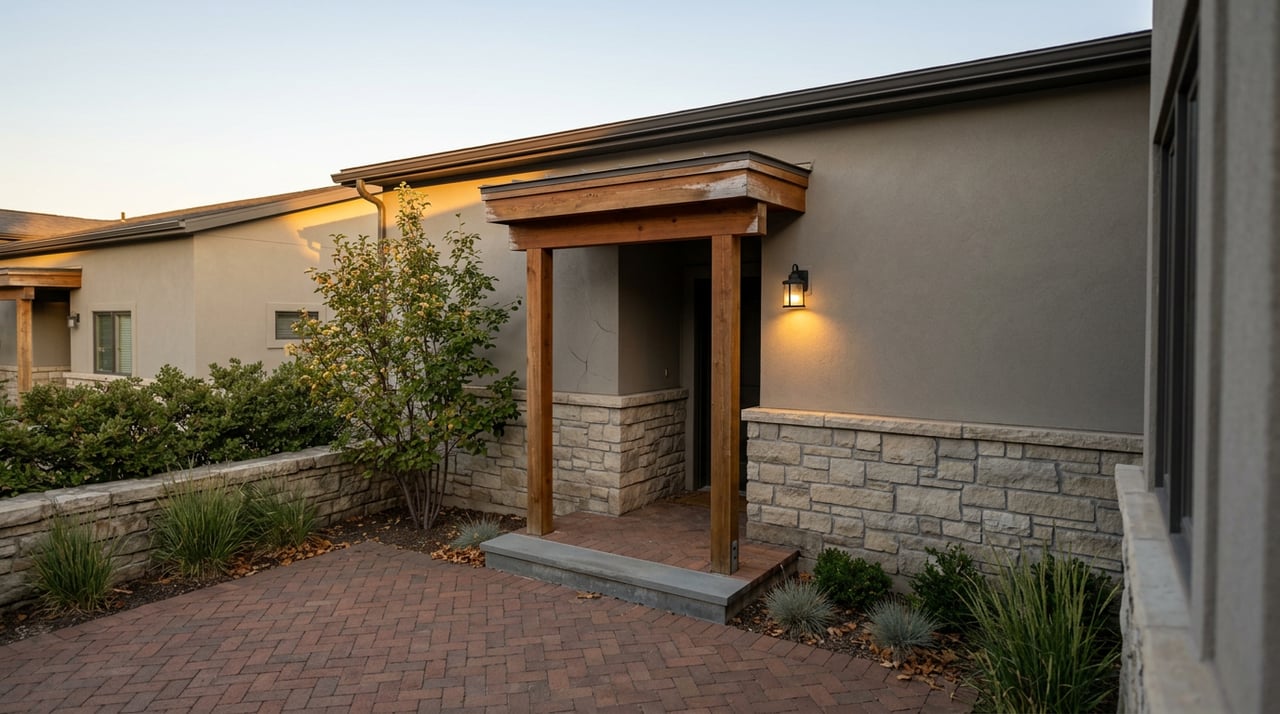
The storefront at 1225 Alpine Avenue is dark again. For the past several years it held Pekoe, the tea and coffee shop where a lot of Newlands mornings started before anyone crossed Broadway to the grocery store next door. As of this summer, Yelp lists the location as closed. The lease ran out, the rent didn't work, and the space that has anchored one end of the plaza's western row went quiet.
Here's what almost nobody who mourned that closing this spring knew: that exact storefront has never stayed with one business for very long. In 1958, when the shopping center first opened, that same spot belonged to the Beauty Centre. It's been through several identities since. Pekoe wasn't an institution getting pushed out of a stable neighborhood fixture. It was the latest occupant of a space that has been changing hands for 68 years.
That distinction matters if you live in Newlands and shop at this corner every week, because it changes what you're actually losing when a tenant leaves, and what you're not.
The plaza was built for people who used to be called something else
The shopping center at Alpine Avenue and Broadway, now generally known as the Ideal Broadway Shops, opened in 1958 as a product of Boulder's post-war expansion. At the time, the residential streets we now call Newlands, along with the neighborhoods stretching up toward Iris Avenue, were simply lumped into a broader area the city called North Boulder. Those residents had stopped wanting to ride a bus downtown for groceries and hardware. They wanted stores close to home with parking out front. The suburban shopping center was the answer.
Architect Hobart Wagener designed the building with a jagged roofline that became one of his signatures. Two years later, in 1960, he designed the curved-roof Community Plaza directly across Alpine Avenue, giving the intersection two distinct architectural statements from the same hand within a 24-month span.
The opening-day tenant roster is worth reading slowly if you think of this plaza as a fixed community institution: Ideal Market, Gene Lang Pharmacy, Bob Ruble's Barber Shop, the Beauty Centre, Model Laundry, Tasty Bake Shop, Manuel's Sweet Shop, Broadway Fabrics, and Johansen Hardware. By 1967, nine years later, the bake shop, the sweet shop, and the fabric store were already gone, replaced by German's Donuts and Sandwiches, a Dairy Queen, and a uniform shop.
That's not decline. That's the plaza doing what strip shopping centers do. The tenant list has never been static. It's been a rotation since the second Eisenhower administration.
One tenant never left, and even that one changed hands
Ideal Market is the exception, and it's worth being precise about what kind of exception it is. The grocery store has anchored the east end of the building continuously since 1958. It never moved, never closed, never sat vacant while a new operator was found. For decades it was run day to day by co-owner Clark Chapman, who was known for interacting directly with customers at the store he helped build.
Chapman retired in 1989 and sold to a group of investors. A newspaper reporter covering the sale at the time wrote that the buyout symbolized what he called the encroachment of faceless urbanization. That phrase sat in a Boulder newspaper archive for 37 years until Jeff Rommel, Pekoe's co-owner, brought it up unprompted in a recent interview about his own closing.
"That quote is the truth to a T," Rommel said.
Rommel's version of the same complaint, made as his own lease wound down, was more direct: he hoped to find another spot in Boulder where the rent was affordable, somewhere with what he called respect for the community.
Two business owners, separated by nearly four decades, used almost the same language to describe the same corner going through the same transition. The grocery store itself is proof the plaza can hold a category of business in place for 68 years. It just took becoming part of the Whole Foods portfolio to get there, which is its own kind of consolidation story, just one with a longer runway than a coffee shop can usually get.
What actually changed this time
Reader comments on the local reporting that first covered Pekoe's closing this year land on a real question: who owns this plaza now, and what do they want from it. Nobody in that conversation had a confirmed answer, and neither do I. What's confirmed is simpler and more useful for anyone who actually walks that corner. The physical building Wagener designed hasn't changed. The grocery anchor hasn't moved. What has changed, repeatedly, is which small business occupies the storefronts around it, and how long each one gets before the math on rent stops working.
One commenter on that same article, a woman who took a job at the Ideal Market deli in 1995 as a new mother in the neighborhood, said she still has the sweatshirt from that job three decades later. That's the kind of attachment this plaza generates, and it's real. It's just attached to a location and an institution, not to any single tenant who's occupied the storefronts around it. The Beauty Centre didn't get that kind of loyalty preserved in a closet somewhere. Neither did German's Donuts. Pekoe won't be different in that respect, even though the coffee and the community feel were real while they lasted.
What to actually watch for at that corner
If you live in Newlands and want to know whether something is replacing Pekoe, the honest answer right now is that nobody outside the ownership group has said. Based on the plaza's own history, a nine-year gap between full tenant refreshes in the 1960s and a comparable pattern of quiet substitutions since, the space at 1225 Alpine Avenue will likely hold a new business again before too long. Whether it's another cafe, a service business, or something closer to what filled the Beauty Centre's original footprint is not something the historical record can predict.
What the record does tell you is where to look if you want an early signal. Watch the storefront itself, not the plaza's reputation. The plaza's reputation as a neighborhood anchor is durable precisely because it's never depended on any one tenant staying put. It depends on the grocery store staying open, the parking lot staying full enough to matter, and Wagener's jagged roofline staying recognizable from Broadway. All three of those have held for 68 years. The rest has always been furniture.
That's a more accurate way to read the news than treating each closing as evidence the neighborhood is losing something permanent. Newlands isn't losing its shopping center. It's watching the same corner do what it's done roughly every decade since Eisenhower, and this time the tenant leaving happened to be the one currently running the espresso machine.
If you're weighing what a shopping corridor like this one signals about a neighborhood's long-term character, that's exactly the kind of question worth a conversation grounded in the actual local record rather than a gut read. Juli Kovats has spent her career tracking how Boulder's individual corners, not just its median prices, hold up over time. If you want that kind of read on Newlands or any of the neighborhoods around it, start the conversation and schedule a free market consultation.