If you are drawn to Pine Brook Hills, you are probably not looking for a one-note neighborhood. This mountain community west of Boulder offers a small but varied housing mix, and the style of the house often shapes how your day-to-day life feels inside it. If you want to understand what those styles really mean before you buy or sell, this guide will help you read the homes with more clarity. Let’s dive in.
Why architecture matters in Pine Brook Hills
In Pine Brook Hills, architecture is not just about curb appeal. It also affects light, views, layout, maintenance, and what it takes to update a home over time.
This is an unincorporated mountain community of about 400 homes just west of Boulder. The neighborhood formed in 1960, and today it sits close enough to downtown Boulder for roughly a 10- to 15-minute drive while still offering a distinctly mountain setting.
That combination helps explain why the housing stock feels layered. Public-facing neighborhood guides and current listings point to three recurring visual families: classic mountain cabins, mid-century contemporaries, and newer mountain-modern builds.
Classic mountain cabins
What they look like
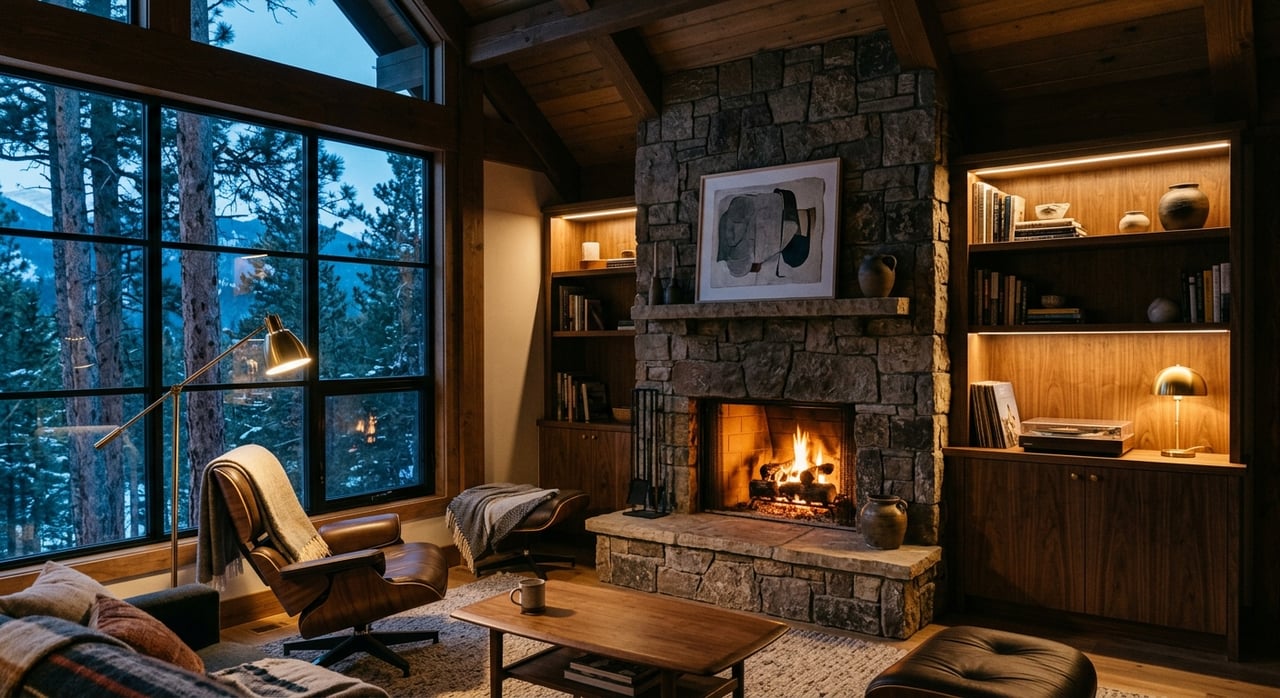
Classic cabins are the most recognizable expression of mountain living in Pine Brook Hills. You will often see knotty pine, log walls, hand-hewn beams, chalet-like forms, and a warm rustic exterior presence.
These homes tend to feel rooted in the original mountain identity of the neighborhood. Even when updated, they usually keep some of that textured, wood-forward character that buyers associate with a retreat setting.
How they tend to live
At first glance, cabin-style homes can feel enclosed and intimate. That is part of the appeal, especially if you want a cozy atmosphere and a stronger sense of separation from the city.
The best-updated examples often balance that rustic feel with a more open interior. Vaulted beamed ceilings, wider living-dining-kitchen areas, and larger windows can make the home feel brighter and more connected to the forest and Continental Divide views.
In practical terms, these homes often live best when the original cabin bones have been edited for modern flow. You may get the warmth of a traditional mountain house with a floor plan that works better for full-time living.
What buyers should watch for
Cabin-era homes are often the most likely to need exterior upgrades when modernized. Window replacement, roof work, siding improvements, and wildfire hardening can all become part of the ownership conversation.
In western Boulder County, wildfire mitigation rules apply to new buildings, additions, alterations, and repairs. The county’s building process requires ignition-resistant or noncombustible materials in wildfire zones, and exterior changes in Pine Brook Hills also go through the HOA Architectural Review Committee.
That does not make cabin homes less appealing. It simply means you should evaluate charm and renovation burden at the same time.
Mid-century contemporaries
What they look like
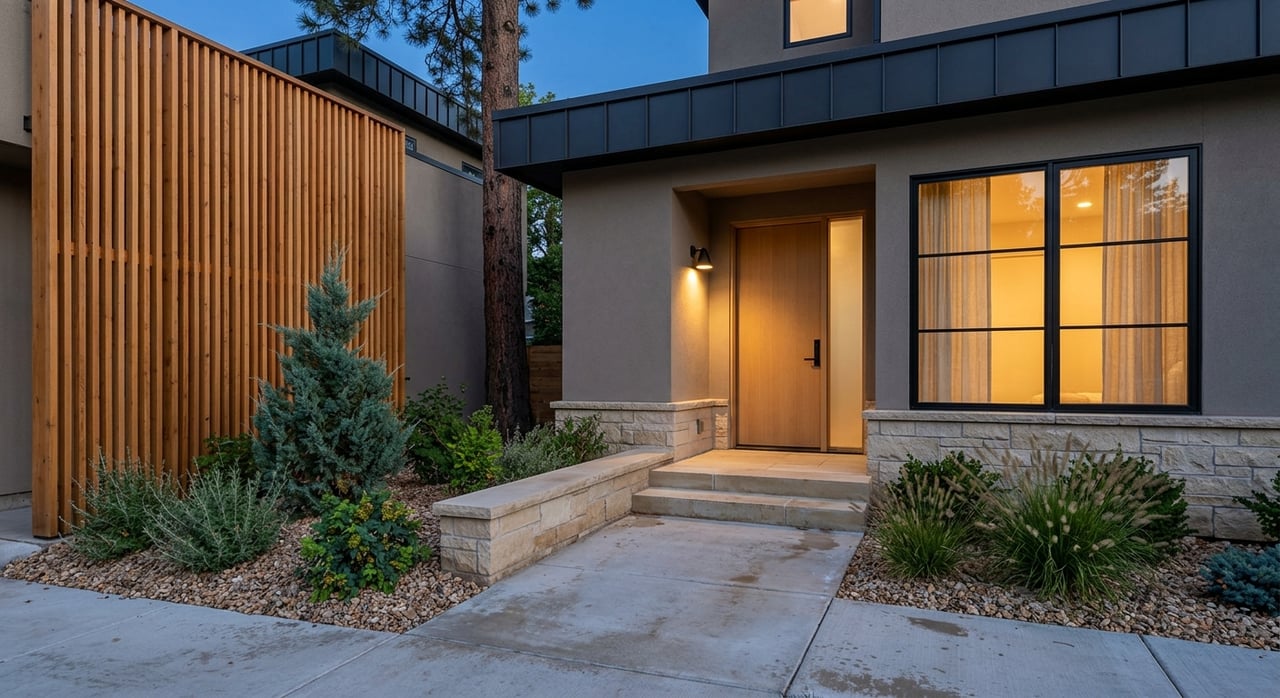
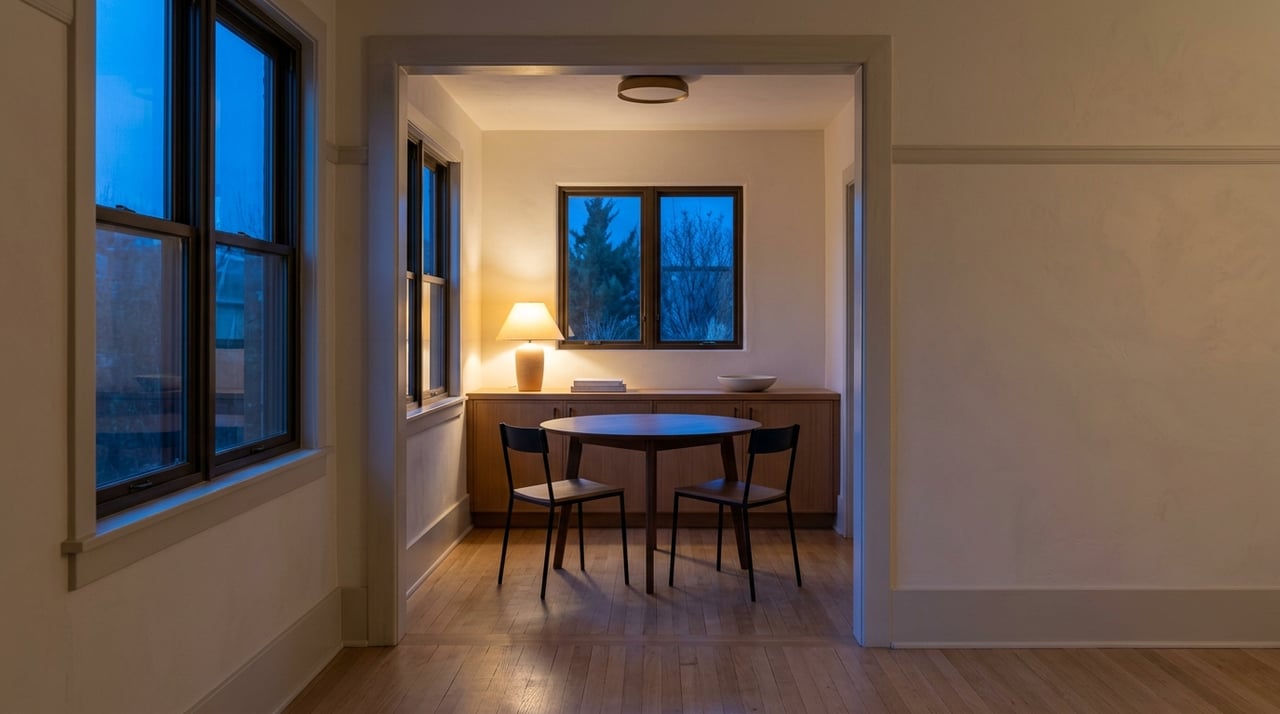
Mid-century homes in Pine Brook Hills are often defined less by decoration and more by proportion, siting, and orientation. Think vaulted ceilings, exposed beams, stone fireplaces, and a layout that responds directly to the land.
Public-facing neighborhood guides and listings also suggest some overlap here with raised ranches, split-levels, and mid-century-influenced farmhouse forms. In this part of Boulder County, the category can feel broad, but the common thread is a design language that lets the setting take the lead.
How they tend to live
These homes often make the site do the work. Many are positioned to capture sun and long views across the reservoir, plains, and foothills.
That can create a quieter style of living, with rooms that feel tuned to the landscape rather than packed with decorative detail. Even when the floor plan has multiple levels, the overall experience often feels more horizontal and view-focused.
For many buyers, this style hits a sweet spot. It can feel architecturally interesting without becoming overly formal, and it often suits people who care as much about orientation and natural light as they do about square footage.
What buyers should watch for
With mid-century properties, the key question is often how much of the original shell should stay intact. Cosmetic interior updates may be straightforward, but larger additions or expansions can involve more planning.
Boulder County notes that bigger projects, new construction on vacant parcels, or expansions that cross county thresholds may trigger permit review and site plan review. If the work affects the exterior, wildfire code, HOA ARC review, and access issues can all become part of the process.
For sellers, that matters too. If your home has preserved mid-century character along with thoughtful updates, that combination may be an important part of how the property is positioned.
Newer mountain-modern builds
What they look like
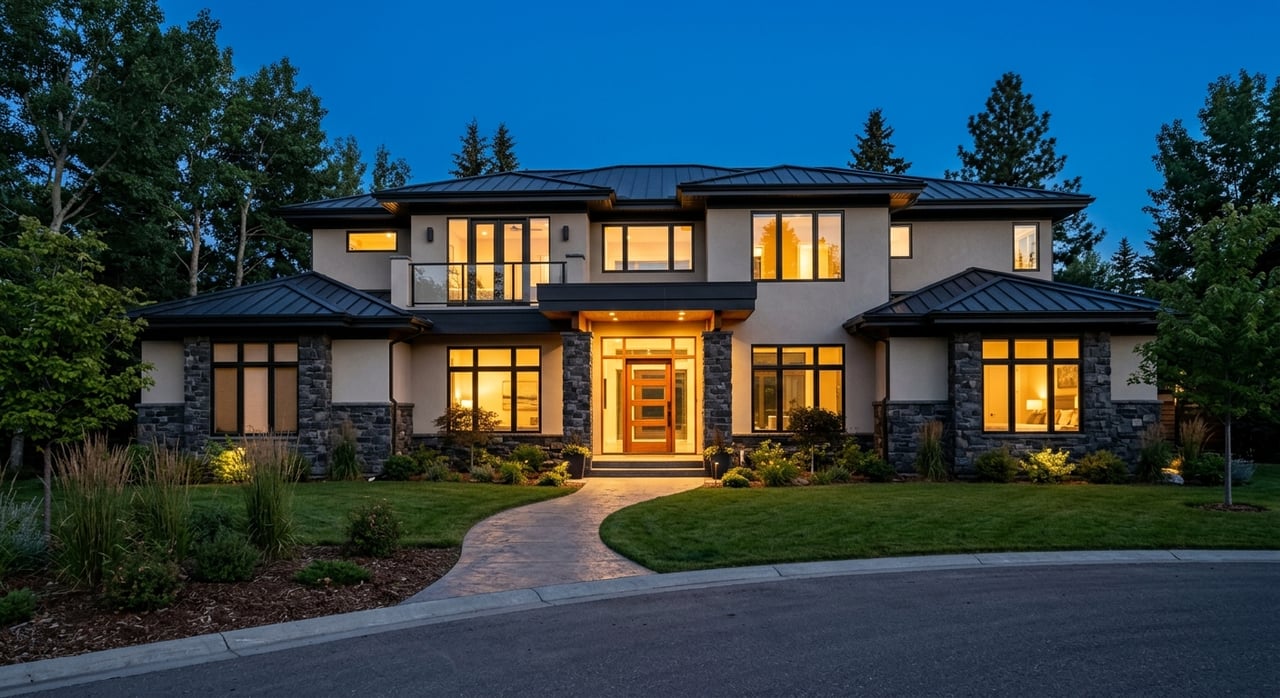
On the sleekest end of the Pine Brook Hills spectrum, newer mountain-modern homes bring a more current design vocabulary. Listing examples point to open floor plans, very tall or cathedral ceilings, walls of glass, steel details, radiant floors, and generous decks.
You will also often see main-level primary suites and cleaner rooflines and material palettes. These homes generally read as more contemporary from the street and more expansive once you step inside.
How they tend to live
Mountain-modern homes are typically designed around light, flow, and indoor-outdoor connection. Kitchens, dining areas, and living rooms often read as one continuous space, with decks or large doors extending the usable living area outward.
Compared with older cabins or mid-century homes, newer builds are also more likely to include flex spaces, live-work areas, and spa-like primary suites. That can make them especially appealing if you want a home that supports full-time mountain living, not just occasional retreat use.
This style often feels the easiest for buyers who want a move-in-ready experience. The tradeoff is that the design may feel less rustic or less rooted in the original era of the neighborhood, depending on your preferences.
What buyers should watch for
Newer construction may already reflect more current code thinking, including ignition-resistant or noncombustible exterior materials. Still, newer does not mean maintenance-free.
These homes remain subject to the same mountain ownership realities, including Boulder County wildfire standards, HOA exterior review, and Pine Brook Water District rules related to pressure regulation, service-line responsibility, frozen pipes, and access to meter pits. A modern build starts from a newer baseline, but it still lives within the same mountain systems.
How to read a Pine Brook Hills home beyond style
Light and orientation
In Pine Brook Hills, a pretty house is only part of the story. You also want to know how the home captures morning light, afternoon sun, and long-range views.
This is especially important in a mountain setting, where orientation can shape daily comfort and how open the home feels in every season. A rustic cabin with great windows may live larger than expected, while a bigger house with weaker light may feel less inviting.
Decks and outdoor usability
Outdoor space matters differently in mountain communities. Instead of asking only how much deck area a home has, it helps to ask how usable that space is through the seasons.
Covered decks, wraparound configurations, and transitions from the main living areas can make a big difference. In Pine Brook Hills, the best outdoor spaces tend to feel connected to the home rather than added on as an afterthought.
Wildfire preparedness
Ownership in Pine Brook Hills is as much about performance as appearance. Boulder County wildfire rules affect new buildings, additions, alterations, and repairs, so exterior design choices often carry both aesthetic and practical implications.
If you are buying, look closely at what has already been done. If you are selling, clear documentation of exterior improvements and hardening work can help buyers better understand the value of the property.
Access and mountain operations
Roads and winter access are part of everyday living in this area. Boulder County maintains Linden Drive and provides snow removal and road services, while subdivision roads still require ongoing attention over time.
That means the way a home sits on its lot and how easily it is reached can matter almost as much as the architecture itself. In Pine Brook Hills, design and logistics are closely linked.
Which style fits your life best?
The right style in Pine Brook Hills usually comes down to how you want the home to feel and how much updating you want to take on. The label matters, but the lived experience matters more.
If you love warmth, texture, and a more tucked-in mountain character, a classic cabin may be the right fit. If you care most about siting, sunlight, and a home that responds to the landscape, a mid-century contemporary may speak to you.
If your priority is openness, newer materials, and a layout built for modern daily living, a mountain-modern home may offer the best match. In every case, it helps to weigh style alongside light orientation, deck usability, wildfire preparedness, and the likely retrofit burden.
For sellers, this same framework can sharpen your positioning. A home is easier to market well when its architecture is connected to the way it actually lives.
Pine Brook Hills rewards a careful read. If you are buying or preparing to sell, understanding the difference between rustic charm, view-driven design, and modern openness can help you make a more confident decision. If you want help evaluating how a specific property fits the Pine Brook Hills market, start the conversation with Juli Kovats.
FAQs
What architectural styles are most common in Pine Brook Hills?
- The most common styles reflected in public-facing guides and listings are classic mountain cabins, mid-century contemporaries, and newer mountain-modern homes.
How do classic cabins in Pine Brook Hills usually feel inside?
- They often feel cozy and enclosed at first, but many updated versions add vaulted ceilings, larger shared living areas, and broader windows for a more open mountain-living feel.
What defines a mid-century home in Pine Brook Hills?
- These homes are often defined by their siting, views, vaulted ceilings, exposed beams, and layouts that respond closely to sun and landscape.
Are newer mountain-modern homes in Pine Brook Hills easier to maintain?
- They may start with more current materials and code-minded construction, but they still require mountain maintenance and remain subject to wildfire standards, HOA review, and local water district rules.
What should buyers consider before remodeling a Pine Brook Hills home?
- Buyers should consider wildfire code requirements, Boulder County permit review, HOA Architectural Review Committee review for exterior changes, and the likely scope of roof, siding, window, or access-related work.
Why does home orientation matter in Pine Brook Hills?
- Orientation can affect sunlight, views, seasonal comfort, and how open a home feels, which makes it a major part of how the property lives day to day.