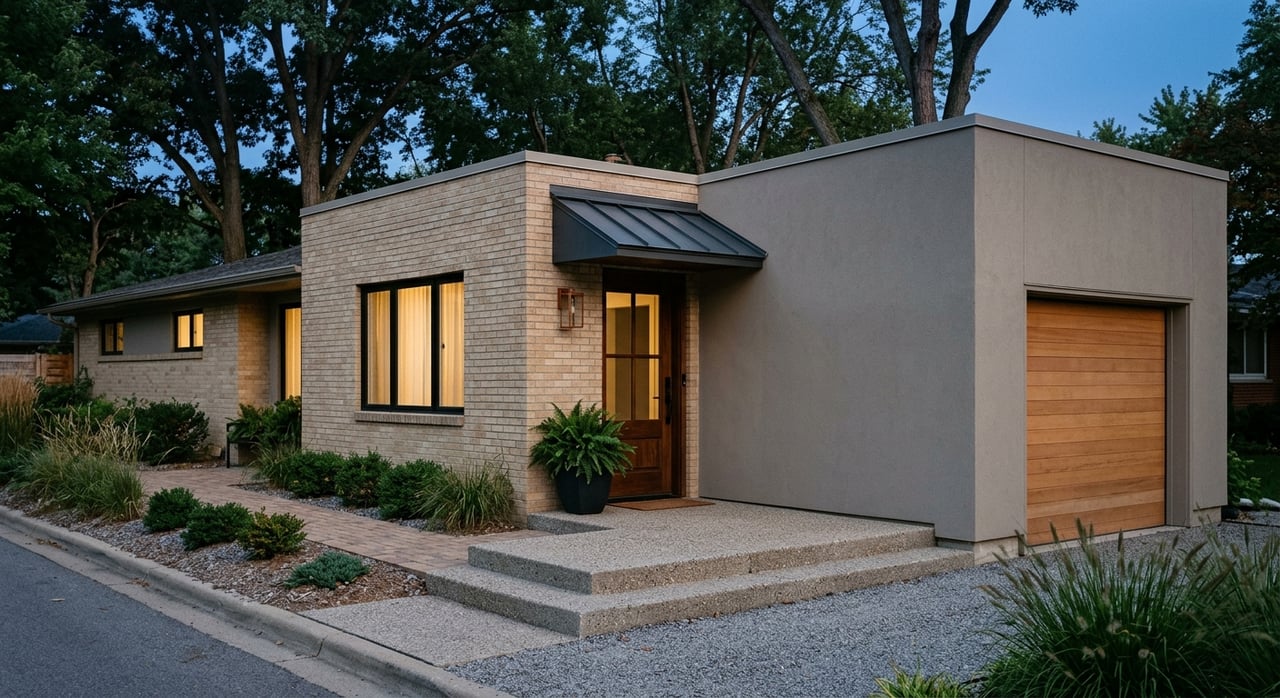
Wondering whether a Melody Heights home is best suited for a remodel, an addition, or a full rebuild? You are not alone. In this part of Boulder, many homes date to the early 1960s, which means buyers and owners often face the same question: how do you unlock more function and value without overbuilding the lot or running into city limits? This guide will help you think through the tradeoffs, the zoning basics, and the practical next steps before you commit. Let’s dive in.
Why Melody Heights homes invite this question
Melody Heights appears to be a postwar Boulder subdivision that took shape in the early 1960s. Public records and local history sources point to homes built around 1962 through the mid-1960s, which lines up with the ranch, split-level, and bi-level styles still seen in the neighborhood today.
That matters because these homes often have solid bones, practical layouts, and lots that feel usable. At the same time, many buyers want more open living space, updated systems, larger primary suites, or better indoor-outdoor flow than an original 1960s floor plan may offer.
What the housing stock suggests
Public-record examples in Melody Heights show a fairly consistent pattern. Several homes sit on lots around 7,000 to 9,600 square feet, with some larger parcels approaching 12,000 square feet.
The examples also reflect the home types that most affect renovation decisions:
- Ranch homes
- Split-level homes
- Bi-level homes
- Homes with finished or finishable basements
That combination is important because layout and lot size usually drive the decision more than style alone. A ranch with a basement may offer easier interior reworking. A split-level may be trickier to expand cleanly. A larger flat lot may create more addition options than a smaller parcel with tighter site constraints.
Start with zoning, not inspiration photos
Before you get too attached to any concept, confirm the property’s zoning on the City of Boulder zoning map. Boulder’s land-use rules are parcel-specific, so two homes in the same neighborhood may not have the same building envelope.
For lower-density residential districts, the city commonly lists principal-building setbacks of 25 feet in the front and rear, 5 feet on an interior side yard, 15 feet total for combined side yards, and 12.5 feet on a side yard next to a street. If you are thinking about attaching new space, Boulder treats attached structures as additions to the main home, so those principal-building setbacks still apply.
Building coverage can be the real limiter
Setbacks are only part of the story. Building coverage often becomes the more important number when you are deciding whether an addition is realistic.
Boulder defines building coverage as the maximum horizontal area of buildings at or above ground level. The city provides a lot-size formula, and its own example shows that a 7,000-square-foot RL-1 lot can max out at 2,450 square feet of building coverage.
Using that same formula, a 7,036-square-foot lot would allow about 2,457 square feet of building coverage, while a 9,263-square-foot lot would allow about 2,903 square feet. That is not total floor area. It is the allowed building footprint at or above ground level, which is a key distinction when you are comparing a basement remodel to a larger above-grade addition.
When a remodel makes the most sense
For many Melody Heights homes, a remodel is the simplest and most efficient path. This is especially true when the current footprint already works reasonably well and the main goal is to improve livability rather than create a dramatically larger house.
A remodel may be a strong fit if you want to:
- Update kitchens or baths
- Improve flow between living spaces
- Refresh finishes and systems
- Rework existing bedrooms or common areas
- Finish or improve a basement
Because several Melody Heights homes appear to have ranch or split-level layouts and some have basements, interior changes can sometimes deliver meaningful gains without pushing into setback or coverage issues. In practical terms, that can mean less friction than trying to force new square footage onto a constrained lot.
When an addition may be worth exploring
An addition starts to make sense when you need more room and the parcel still has enough legal capacity to expand. In Melody Heights, the key phrase is parcel-specific.
A lot in the 7,000-square-foot range may support a modest footprint increase, but not necessarily a large rear addition, a broad new wing, or a second-story plan that also requires major structural changes. A larger parcel may offer more flexibility, especially if the existing house placement leaves usable space within setbacks and coverage limits.
This is where careful planning matters. On paper, a lot may look big enough. In reality, once you account for setbacks, existing footprint, and allowable coverage, your options may narrow quickly.
Questions to ask before planning an addition
- How much unused building coverage is left?
- Does the current house placement leave room inside required setbacks?
- Would a basement upgrade solve part of the space problem instead?
- Are you paying a high cost for square footage that may not add equal resale value?
For many owners, the smartest answer is not the biggest addition. It is the one that improves function without overcomplicating the project.
When a rebuild may be the better answer
A rebuild can make sense when the existing home is too limiting for your goals. If the house would need such extensive changes that little of the original structure remains useful, starting over may be the cleaner path.
This can happen when you want a completely different layout, much more square footage, or a level of structural change that turns a remodel into a near-total reconstruction. In those cases, rebuilding may offer better design efficiency than trying to make an older layout do something it was never built to do.
But in Boulder, age matters. Many Melody Heights homes are now more than 50 years old, and non-designated buildings over 50 years old may require historic preservation demolition review if the project meets the city’s definition of demolition.
That definition can include:
- Removing more than 50% of the roof
- Removing more than 50% of the exterior walls
- Removing any portion of a street-facing wall
This does not automatically stop a teardown or major reconstruction. It does mean you should verify review requirements early, before you spend heavily on design work.
Historic review is a real planning factor
For Melody Heights, the neighborhood’s age puts historic demolition review on the checklist sooner than many buyers expect. Even if a home is not landmarked or designated, the age threshold can still trigger city review depending on the scope of work.
That means the remodel-versus-rebuild decision is not just about design preference or budget. It is also about process, timing, and whether the level of planned removal crosses Boulder’s review thresholds.
If you are buying with the goal of transforming a property, this is one of the most important early diligence steps. A quick assumption here can become an expensive delay later.
How value often favors smart updates
The broad cost-versus-value pattern is fairly consistent: smaller, targeted improvements often recoup more of their cost than large additions. National 2024 figures show about 96.1% cost recouped for a minor kitchen remodel and about 82.9% for a wood deck addition, compared with about 49.5% for a major kitchen remodel, 35.5% for a primary suite addition, and 34.7% for a bathroom addition.
These are national averages, not Boulder-specific resale guarantees. Still, the pattern is useful. In a neighborhood where lot sizes and city bulk standards can limit expansion efficiency, thoughtful livability upgrades may outperform expensive square-footage pushes.
In other words, better flow, better condition, and smarter use of existing space can be more financially sensible than building the biggest possible house the site can hold.
A practical way to decide
If you are evaluating a Melody Heights property, it helps to compare all three paths side by side.
| Option | Best fit | Main constraint |
|---|---|---|
| Remodel | Existing footprint mostly works | Limited ability to create entirely new space |
| Addition | You need more room and have legal envelope left | Setbacks and building coverage |
| Rebuild | Current house is too constrained for your goals | Historic review, process, and cost |
This kind of side-by-side thinking is especially valuable in Melody Heights because homes may look similar from the street while offering very different renovation potential once you study the lot and zoning.
Due diligence before you commit
Whether you are buying a home to improve or deciding what to do with the one you already own, start with the facts. A few early checks can save time, money, and frustration.
Use this checklist as your starting point:
- Confirm the parcel’s zoning on the City of Boulder zoning map
- Pull the county assessor record and confirm the year built
- Verify lot area if the project may approach building coverage limits
- Test the concept against principal-building setbacks
- Check whether the scope could trigger historic demolition review
- Compare basement finishing, interior reconfiguration, and an addition before assuming teardown is the best answer
Boulder also notes that an accurate survey may be required when a proposal is within 20% of the maximum allowed building coverage. That is one more reason to ground your plan in verified property data rather than rough estimates.
What this means for buyers and sellers
If you are a buyer, the right opportunity in Melody Heights may not be the most polished house. It may be the one with the best combination of lot utility, layout flexibility, and legal expansion potential.
If you are a seller, understanding whether your home is best framed as move-in ready, remodel-friendly, or rebuild-worthy can shape pricing and marketing strategy. Buyers in Boulder often respond well to clear, fact-based positioning, especially when a property’s upside depends on zoning, lot size, or age-related review rules.
In both cases, local context matters. The value is not just in seeing what a home is today, but in understanding what it can realistically become.
If you are weighing a Melody Heights purchase, preparing to sell, or trying to decide what level of improvement makes sense for your property, Juli Kovats can help you look at the numbers, the neighborhood context, and the real-world tradeoffs with clarity.
FAQs
Should I remodel or rebuild a Melody Heights home in Boulder?
- The best choice depends on the home’s layout, available building coverage, setback limits, and whether the scope of work could trigger historic demolition review for a home over 50 years old.
Can I add square footage to a Melody Heights home?
- Possibly, but you need to confirm the parcel’s zoning, setbacks, and allowed building coverage because Boulder rules are parcel-specific.
Are most Melody Heights homes older homes?
- Yes. Public records and local history sources suggest many Melody Heights homes were built in the early to mid-1960s.
Does Boulder historic review affect Melody Heights teardowns?
- It can. Non-designated buildings over 50 years old may require historic preservation demolition review if the planned work meets Boulder’s demolition definition.
Do larger lots in Melody Heights always mean easier additions?
- Not always. A larger lot can help, but the real answer depends on the home’s placement, setback requirements, and remaining allowable building coverage.
Is finishing a basement a good alternative to an addition in Melody Heights?
- In many cases, yes. Because several Melody Heights homes have layouts and lower levels that may be reworked, basement improvements can be a practical way to gain function without expanding the above-grade footprint.