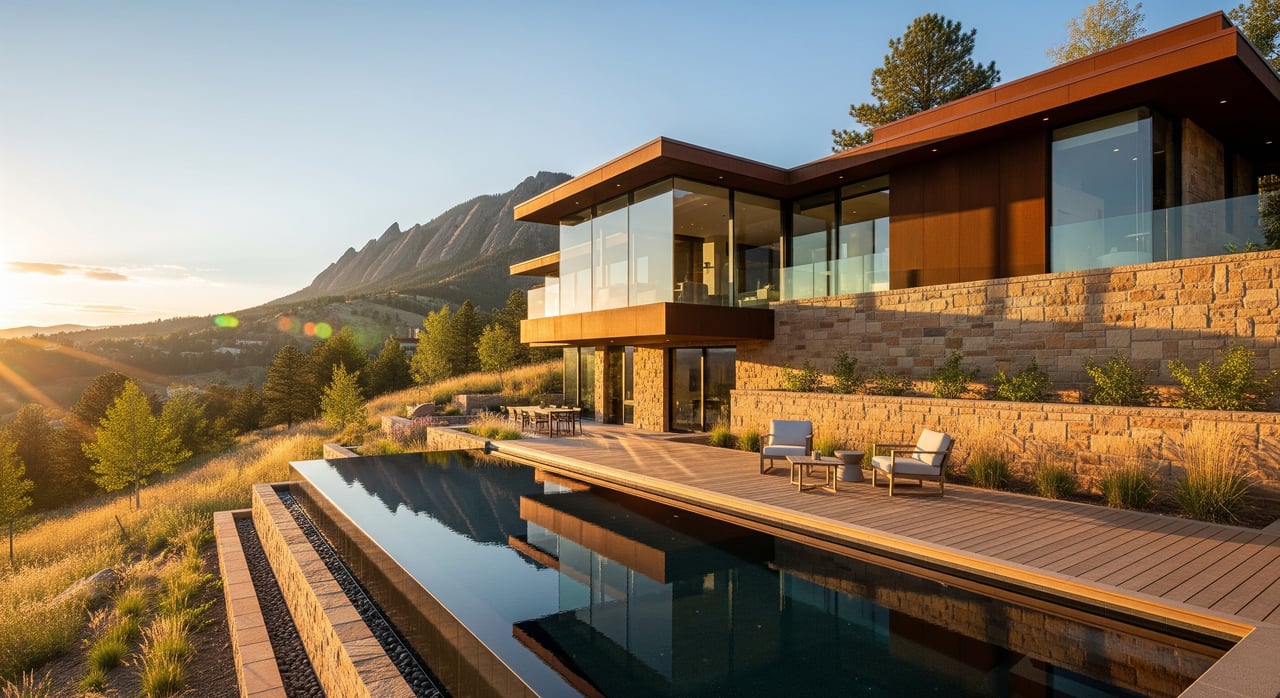
Remodeling on a hillside can deliver stunning views, smarter space, and better year‑round performance. It also asks more of your plan. In Boulder’s mountain communities, slope, soils, wildfire, and access shape design, permitting, budget, and timeline. With the right sequence and team, you can protect your site and invest where it matters most.
Hillside remodel basics: what to expect
Hillside projects are different from flat‑lot renovations. You balance structure and style with slope stability, drainage, and wildfire readiness. Expect more up‑front investigation, more engineering, and a longer permit path. The upside is a safer, more livable home that fits the mountain setting.
Benefits you can expect:
- Better daylight and views through smart orientation
- Safer access, improved drainage, and longer‑lasting finishes
- Energy and wildfire upgrades that protect comfort and value
Tradeoffs to plan for:
- Added design and engineering costs
- Careful staging due to limited access
- Seasonal windows for earthwork and inspections
Evaluate site and structure first
Start with due diligence before sketching layouts. Early clarity saves time and change orders later.
Slope, soils, and stability
On a slope, subsurface conditions drive scope and cost. Many Boulder‑area hillsides require a geotechnical evaluation to assess landslide or rockfall susceptibility, swelling soils, depth to bedrock, and groundwater. A geotech’s report informs foundation type, retaining wall design, and grading limits. Boulder County uses geologic hazard mapping as a screening tool and may require site‑specific studies even if maps look benign. The Colorado Geological Survey also highlights landslide susceptibility in the foothills that varies from parcel to parcel. Review the maps, then commission a site investigation to ground your design in facts Boulder County geologic hazard mapping and Colorado Geological Survey resources.
Drainage and erosion control
Water is the quiet force that moves slopes. Plan for subdrains, surface grading, downspout extensions, and controlled discharge away from foundations and the toe of any slope. Boulder County’s earthwork guidance emphasizes minimizing cut and fill, keeping slopes gentler than about 2:1 unless engineered, and revegetating quickly after disturbance to lock soil in place County earthwork and grading guidance.
Fire risk and defensible space
If your property sits in the Wildland Urban Interface, ignition‑resistant materials and defensible space are essential. Both the City of Boulder and Boulder County apply wildfire mitigation standards for new work in WUI zones. Expect requirements for noncombustible roofing and siding choices, ember‑resistant vents, and strategic landscape spacing around structures City WUI code overview and County wildfire mitigation requirements.
Access, parking, and driveways
Driveway geometry affects everything from fire apparatus access to daily parking. Long or steep driveways may need turnouts, turnarounds, and grade limits set by fire and transportation standards. If you are adding a garage or expanding, check the access permit requirements and design the turning radius for winter conditions before finalizing plans County access permits.
Permits and approvals: plan early
Boulder’s mountain corridors often fall under extra layers of review. Start approvals in parallel with design so you can phase work without surprises.
Zoning, setbacks, and height
First, confirm whether you are in the City of Boulder or unincorporated Boulder County. Rules differ. Both jurisdictions use overlays and standards to protect sensitive hillsides and ridgelines. City projects submit through the Customer Self Service portal and some sites trigger discretionary reviews like Site Review. In the County, an Ask a Planner intake helps flag additional planning steps. Expect complete plan sets and site plans that show grading, tree removal, and retaining solutions City permits and process and County building permits.
Septic, wells, and utilities
If you are outside city services, verify well capacity, septic location, and reserve area before you expand. Trenching on a slope, relocating tanks or leach fields, and ensuring fire flow or on‑site storage can drive scope and sequence. Clarify these early with the jurisdiction so utility work ties cleanly into your building permit path County building permits.
Architectural reviews and neighbors
Some neighborhoods and canyon communities have design committees. Even when not required, early neighbor communication about staging, temporary lane closures, and vegetation changes can smooth the process and reduce appeals during public notice periods.
Seasonal timing and inspections
Earthwork, concrete, and revegetation perform best in specific weather windows. Plan inspections around access and snow. Jurisdiction reviews move faster with complete submittals. The City’s application guide outlines status steps, review cycles, and resubmittals so you can forecast the calendar accurately City permit application guide.
Slope-smart design strategies
Good hillside design integrates engineering with everyday comfort.
Foundations, retaining, and terracing
Typical foundation solutions include drilled piers or caissons, pier‑and‑beam systems, and reinforced stem walls. Retaining options range from cast‑in‑place concrete to soldier pile with lagging, gabions, and mechanically stabilized earth walls. Multiple low walls and terracing often fit the land better than one tall wall. All large walls should be engineered and inspected to meet standards and protect the slope general retaining wall practice context and national cost context for retaining walls.
Water management and waterproofing
Use layers of defense: thoughtful grading and swales, perforated subdrains, waterproof membranes at foundations, capillary breaks, and backup sump systems where needed. Tie drains to daylight safely and protect outlets from erosion with rock energy dissipation. The County’s earthwork guidance underscores revegetation and erosion control as part of the same system that keeps water moving where it should County earthwork and grading guidance.
Snow, ice, and roof design
On steep sites, shed roofs and drifting patterns matter. Design snow management at entries and paths, consider heat‑trace at vulnerable eaves, and place walkways outside roof shedding zones. Durable, ignition‑resistant roofs with proper ventilation help both winter performance and wildfire resilience City WUI code overview.
Energy performance and durability
Mountain conditions swing from intense sun to freeze‑thaw. Invest in a tight envelope, high‑performance windows, durable cladding, and protected assemblies where foundations meet grade. These choices boost comfort and keep maintenance manageable in the long run.
Views, light, and privacy
Work with the slope to frame views while controlling glare and heat gain. Use overhangs, light shelves, and selective glazing. Add landscape screening so windows feel open without exposing indoor living to neighbors down the hill.
Budget, team, and risk management
A hillside budget is a story of site work plus structure. Build realistic allowances and contingencies so you can adapt without stress.
Key hillside cost drivers
- Geotechnical studies and engineering
- Foundations and retaining walls, often with drilled piers or staged earthwork
- Drainage, waterproofing, and erosion control
- Access logistics, staging, and hauling on steep terrain
- Wildfire hardening and defensible space
Published ranges can help frame expectations, but local access, wall height, shoring, and rock excavation often dominate final price. Retaining walls can vary widely per square foot, and complex foundations cost more than simple slabs. Obtain multiple local bids and let the geotechnical report set the baseline for structure and drainage national cost context and foundation cost context.
Build your expert team
Architect and structural engineer
Your architect shapes light, flow, and massing while working inside hillside rules. A structural engineer converts the geotechnical recommendations into safe, buildable foundations and walls.
Geotechnical and civil experts
A licensed geotechnical engineer evaluates subsurface conditions and slope hazards, then specifies foundation types, bearing capacity, excavation limits, and drainage. A civil or site engineer prepares grading plans, erosion control, and stormwater details that meet county or city standards CGS landslide resources.
Contractor with slope experience
Choose a general contractor who has built on local steep sites and can coordinate traffic control, shoring, and erosion measures. Ask for a logistics plan that covers equipment access, material staging, and weather contingencies.
Bids, allowances, contingencies
- Issue a consistent scope to all bidders with the same drawings and soils report.
- Carry design allowances for finishes while nailing down structure and site costs early.
- Hold a contingency for unknowns, especially rock conditions and drainage surprises.
Insurance, warranties, documentation
Wildfire exposure has tightened insurance availability and raised premiums in Boulder mountain areas. Standard policies often exclude earth movement. Discuss endorsements for landslide, mudflow, and flood with your carrier. Lenders may ask for engineered foundation reports on high‑risk sites. Document warranties and keep a digital file of plans, permits, inspections, and photos for future value and peace of mind local insurance context.
Build sequence on a slope
A clear sequence helps you coordinate professionals and protect the site.
Site prep, staging, safety
Begin with survey, soils borings, and access planning. Install perimeter controls like silt fence and wattles before any earth moves. Confirm emergency access and communicate schedules to neighbors and delivery services County access permits.
Excavation, shoring, retaining walls
Phase earthwork to avoid over‑excavation. Install temporary shoring where needed and build walls in stages so the slope stays stable. Inspect wall footing subgrades and pier drilling per the engineer’s requirements. The County encourages minimizing cut and fill and restoring with revegetation promptly after each phase County earthwork and grading guidance.
Utility upgrades and trenching
Coordinate trench routes with retaining locations and drainage. Protect existing septic components and wells if present. Restore disturbed areas with erosion blankets and native seed mixes suited to foothills conditions native plant guidance.
Inspections and quality checks
Schedule footing, pier, wall, waterproofing, and drainage inspections as milestones. Third‑party special inspections may be required for tall walls or certain structural elements. The City’s permit guide explains review statuses so you can anticipate resubmittals and finals without delay City permit application guide.
Resale and ROI considerations
Your remodel should feel great now and make sense later if you sell. In mountain neighborhoods, buyers value safety, performance, and low‑maintenance living.
Upgrades buyers value most
- Engineered foundations and properly permitted retaining systems
- Reliable drainage, waterproofing, and dry lower levels
- WUI‑compliant roofing, siding, and ember‑resistant vents
- Functional access, parking, and a garage that works in winter
- Energy improvements that tame temperature swings
Avoid over‑improvement
Keep scope aligned with neighborhood norms, view premiums, and the parcel’s access and parking fundamentals. If the site limits large additions, focus on quality and performance inside the existing footprint.
Documentation for future sale
Organized records build buyer confidence and support appraisals: geotechnical report, stamped engineering, permits, inspection sign‑offs, material warranties, erosion control closeout, and before‑and‑after photos.
Move forward with local guidance
You do not have to map this alone. A short pre‑design consult can clarify jurisdiction, overlays, budget drivers, and the likely timeline so you design with confidence. If you want a sounding board for neighborhood fit, long‑term value, and sequencing around permits and seasons, start a conversation with Juli Kovats. Together we will align your goals, assemble the right team, and plan a smooth path from concept to construction.
FAQs
Do I need a geotechnical report for a hillside remodel in Boulder?
- Often yes. County hazard maps and foothills conditions commonly trigger a site‑specific geotechnical evaluation to guide foundations, retaining, and drainage Boulder County geologic hazard mapping and CGS landslide overview.
What permits are required and who reviews them?
- The City of Boulder and Boulder County have separate processes. City projects run through the permit portal and may require Site Review. County projects often start with Ask a Planner. Both need complete plans for exterior work City permit guide and County permits.
How do wildfire rules affect my remodel?
- If you are in the WUI, expect ignition‑resistant materials, defensible space, and possible vent and window upgrades. Rules apply to many additions and exterior changes City WUI code and County mitigation requirements.
What drives cost on a steep site?
- Engineering, foundations and retaining, drainage, access logistics, and wildfire hardening. Retaining wall and foundation costs vary widely by height, access, and soil or rock conditions national cost context and foundation cost context.
When should I time construction?
- Aim for earthwork and concrete in favorable weather windows. Plan for review cycles and inspections. The City’s application guide outlines submittal steps to help you schedule design and construction phases realistically City permit guide.
How do I handle drainage and erosion long term?
- Maintain subdrains and outlets, keep gutters clear, and re‑seed or mulch disturbed areas. The County’s earthwork guidance stresses revegetation and manageable slope angles to prevent erosion County earthwork guidance.
Will insurance be an issue in the foothills?
- Wildfire exposure has tightened the market, and earth movement is often excluded. Talk with your carrier about endorsements and with your lender about any engineering they require local insurance context.